Blog
|12 min read
Micro Influencer Analytics: How to Find, Measure, and Scale Small Creators Who Actually Convert
Micro influencers (10K–100K followers) outperform mega creators on engagement and conversion — but only if you measure the right things. Here's the analytics framework that separates high-ROI micro creators from vanity metrics traps.
Micro Influencer Analytics: How to Find, Measure, and Scale Small Creators Who Actually Convert
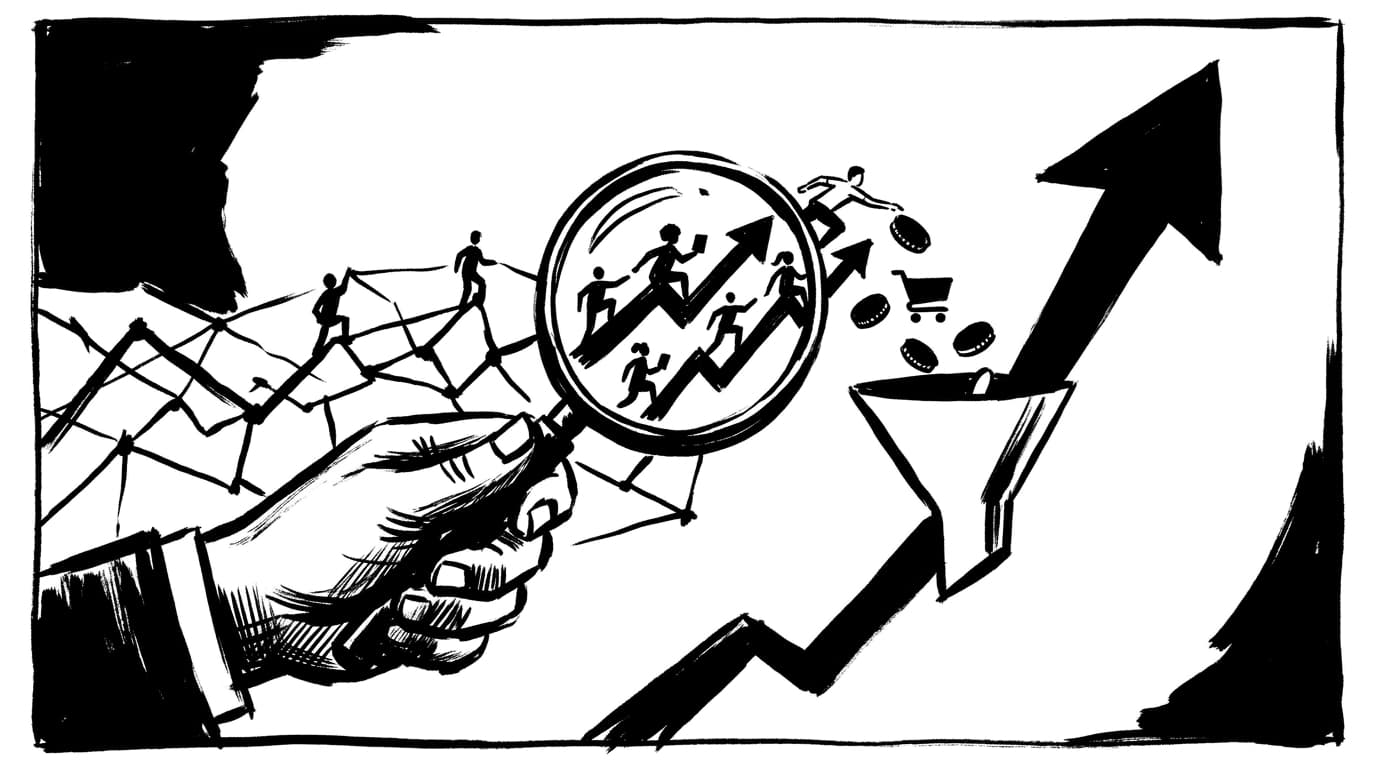
The data is clear: micro influencers (10K–100K followers) deliver 60% higher engagement rates and 20% better conversion rates than macro influencers. But the data is also misleading — because those averages hide enormous variance within the micro tier.
Some micro creators drive $50 in revenue per post. Others drive $5,000. The difference isn't follower count, niche, or platform. It's whether the brand measured the right signals before, during, and after the partnership.
Most brands evaluate micro influencers the same way they evaluate macro influencers — follower count, engagement rate, content quality. That framework breaks at the micro level because the dynamics are fundamentally different.
Here's the analytics framework built specifically for micro influencer campaigns.
Why Micro Influencer Analytics Are Different
Three structural differences make micro creators a distinct analytics challenge:
1. Smaller sample sizes, higher variance. A macro influencer's post reaches 500,000 people. Statistical noise washes out. A micro influencer's post reaches 15,000. One viral spike or one dead post can swing your performance data dramatically. You need more data points per creator before making scaling decisions.
2. Audience quality matters more than audience size. A macro influencer's audience is broad by definition — millions of followers means demographic diversity. A micro influencer's audience is concentrated. That concentration is the asset: tight niche alignment means higher intent. But it also means audience quality varies wildly between two creators with identical follower counts.
3. The creator IS the conversion mechanism. With macro influencers, the brand message does the converting — the creator provides distribution. With micro influencers, trust is the conversion mechanism. Their audience buys because they trust this specific person's recommendation. Analytics need to capture trust signals, not just reach signals.
Pre-Campaign Analytics: Vetting Micro Influencers
Before you spend a dollar, these metrics separate high-potential micro creators from follower-count mirages.
Engagement Quality Score
Raw engagement rate (likes + comments / followers) is the most common vetting metric. It's also the most gamed.
Go deeper:
Comment-to-like ratio. Healthy range: 2–5% (2–5 comments per 100 likes). Below 1% suggests passive audience or engagement pod activity. Above 8% on every post suggests coordinated commenting.
Comment substance. Scroll through the last 10 posts. Are comments genuine responses to the content ("I tried this and it worked!") or generic ("Amazing!" "Fire 🔥" "Love this")? Generic comments at scale = engagement pods or bot activity.
Save rate (where available). Saves indicate high-intent engagement — the viewer wants to return to this content. A creator with 3% engagement rate and high save rate outperforms a creator with 6% engagement rate and zero saves.
Story engagement rate. Stories reach the creator's most active followers. If a creator has 50K followers and 500 story views (1%), their active audience is small. If they have 5,000 story views (10%), the core audience is engaged. Story polls and question responses are even stronger signals.
Audience Authenticity Check
Follower fraud is more prevalent in the micro tier because it's cheaper and harder to detect at smaller scales.
Follower growth pattern. Organic growth is gradual with occasional spikes around viral content. Sudden jumps of 5,000+ followers with no corresponding viral post = purchased followers.
Follower-to-following ratio. A micro influencer following 7,000 accounts with 12,000 followers likely grew through follow-for-follow tactics. Their audience isn't following for content quality.
Geographic concentration. If a US-based lifestyle creator has 40% of followers from countries unrelated to their content (and they don't create content in those languages), investigate. Purchased followers often come from specific geographic clusters.
Engagement-to-follower consistency. Plot engagement per post over the last 30 posts. Consistent engagement (even if modest) indicates real audience. Wild swings from 50 likes to 5,000 likes suggest algorithmic lottery or boosted posts, not reliable reach.
Niche Authority Signals
Micro influencers derive their value from niche credibility. Measure it:
Topic consistency. Review the last 50 posts. What percentage are on-topic for your brand's category? A "fitness micro influencer" who posts 60% fitness content and 40% random lifestyle content has diluted authority. Look for 70%+ topic concentration.
Original content ratio. How much content is original takes, reviews, or tutorials vs. reshared trends and reposts? High original content ratio = the creator has expertise and opinions. High reshare ratio = they're riding algorithmic trends without adding unique value.
Community interaction depth. Does the creator respond to comments? Do they have recurring community themes (e.g., a weekly Q&A, a signature series)? Deeper community interaction means higher trust — and higher conversion potential for your product.
Campaign Analytics: Measuring What Matters During the Partnership
The Micro Influencer Performance Dashboard
Track these metrics for every micro influencer activation:
| Metric | What It Tells You | Benchmark |
|---|---|---|
| Impressions | Raw reach | Varies by platform |
| Engagement rate | Content resonance | 3–7% for micro tier |
| Link clicks / swipe-ups | Purchase intent | 1–3% of impressions |
| Click-to-purchase rate | Conversion efficiency | 2–8% of clicks |
| Revenue attributed | Direct ROI | Varies by product price |
| Cost per acquisition | Efficiency vs. other channels | Compare to paid social CPA |
| Content saves | High-intent engagement | 1–3% of impressions |
| New followers to brand | Brand awareness lift | Track weekly |
Attribution Challenges (And Workarounds)
Micro influencer campaigns are notoriously hard to attribute because:
- Audiences are small, so statistical significance takes longer
- Many conversions happen outside tracked links (viewers search the brand name instead of clicking the link)
- Multi-creator campaigns create overlapping attribution
Workaround 1: Unique discount codes. Give each creator a unique code. Simple, trackable, but underestimates total impact — many buyers see the content, get interested, and buy at full price later without using the code.
Workaround 2: Post-purchase surveys. Add "How did you hear about us?" to checkout. Include the creator's name as an option. Captures the discovery moment better than click attribution.
Workaround 3: Time-series analysis. Track daily website traffic and sales before, during, and after each creator's post goes live. The spike attributable to each creator (above baseline) is your estimated impact. Works best when creators post on different days.
Workaround 4: Brand search lift. Monitor branded search volume (Google Trends, Search Console) during campaign periods. Micro influencer content drives "I'll look that up later" behavior. A 15% lift in branded searches during a micro campaign is a strong signal, even if direct link clicks are modest.
Content Performance Patterns
After running 10+ micro influencer activations, analyze content performance patterns:
Which content formats convert? Product reviews, tutorials, "day in my life" integrations, and unboxing videos each drive different behaviors. Build a format-to-conversion-rate matrix and use it to guide future briefs.
Which hooks drive the longest watch time? Micro creator content lives or dies on the hook. Compare the first 3 seconds of high-performing vs. low-performing posts to identify patterns — problem-first hooks, question hooks, transformation reveals.
Does posting time matter? For micro creators, posting time affects reach more than for macro creators because they're more dependent on initial engagement velocity to trigger algorithmic distribution. Track performance by day of week and time of day.
Tools like ViralDeck let you compare content performance across multiple creators and platforms in one dashboard — essential when you're running 10–20 micro influencer partnerships simultaneously and need to spot patterns without manually pulling data from each platform.
Post-Campaign Analytics: Deciding Who to Scale
The most valuable analytics happen after the campaign, when you decide which micro creators to invest in long-term.
The Micro Influencer Scorecard
Rate each creator on a 1–5 scale across six dimensions:
| Dimension | Weight | What to Measure |
|---|---|---|
| Conversion efficiency | 25% | CPA relative to your target |
| Content quality | 20% | On-brief delivery, production value, authenticity |
| Audience alignment | 20% | Demographic and interest match with your ICP |
| Reliability | 15% | On-time delivery, communication, professionalism |
| Scalability potential | 10% | Growing audience, consistent content cadence, open to deeper partnership |
| Cost efficiency | 10% | Fee relative to performance (not just lowest fee) |
A creator scoring 4+ across all dimensions is a long-term partner. A creator scoring 5 on conversion but 2 on reliability is a calculated risk. A creator scoring 3s across the board is replaceable.
Cohort Analysis: First-Time vs. Repeat Partnerships
Track performance across partnership cohorts:
First activation: Baseline performance. The creator is learning your product and audience response is fresh.
Second activation (30–60 days later): Performance typically improves 15–25% because the creator knows the product better and their audience has seen it before (familiarity builds trust).
Third activation and beyond: This is where you see whether the partnership has legs. If performance holds or improves, you've found a long-term partner. If it drops, the creator's audience is saturated — either rotate to a different content angle or pause.
Red flag: If second-activation performance drops more than 20% from first activation, the creator's audience responded to novelty, not product-market fit. Don't invest in a third activation.
Portfolio-Level Analytics
When managing 10+ micro influencers, portfolio-level metrics matter more than individual creator metrics:
Creator concentration risk. If one creator drives 40%+ of your micro influencer revenue, your program is fragile. Diversify so no single creator represents more than 20% of total micro influencer-attributed revenue.
Category coverage. Map your creators to audience segments. Are you reaching the same narrow segment through 10 creators (overlap) or reaching 5 distinct segments through 10 creators (coverage)? Overlap means you're bidding against yourself.
Cost curve. Plot CPA vs. total spend across your micro influencer portfolio. At some spend level, CPA starts rising because you've saturated available high-quality creators in your niche. Know where that inflection point is — it defines your micro influencer budget ceiling.
Scaling From 5 to 50 Micro Influencers
The 3-Phase Scaling Framework
Phase 1 (5–10 creators): Learn. Test diverse creators across formats, platforms, and audience segments. Measure everything. The goal isn't revenue — it's building your performance model.
Phase 2 (10–25 creators): Optimize. Double down on creator profiles that match your best performers. Standardize briefs for the content formats that convert. Cut creators who underperform after two activations.
Phase 3 (25–50 creators): Systematize. At this scale, you need infrastructure:
- Template-based briefs customized per creator segment
- Automated performance tracking (manual spreadsheets break above 15 creators)
- Rights management for content licensing
- A creator CRM with performance history
ViralDeck's cross-platform analytics become essential at Phase 2+, when manually pulling performance data for 15+ creators across TikTok, Instagram, and YouTube is a full-time job. The platform consolidates creator performance into one dashboard, so you can make scaling decisions based on comparative data rather than gut feel.
Common Scaling Mistakes
Prioritizing follower count over engagement quality when recruiting. At scale, it's tempting to filter by follower count to fill your roster. This gets you more creators faster but dilutes average performance. Filter by engagement quality first, follower count second.
Using the same brief for all creators. A one-size-fits-all brief works for 5 creators. At 20+, you need brief variants for different content styles (review, tutorial, lifestyle integration) and different audience segments.
Not tracking creator fatigue. A creator's audience gets tired of seeing the same product. After 3–4 activations with the same messaging, either refresh the angle dramatically or rotate to a new creator for that audience segment.
Ignoring creator satisfaction. At scale, you're running a creator program, not individual partnerships. Survey your creators quarterly: Are they happy with the partnership? Are briefs clear? Is payment timely? Unhappy creators produce worse content and churn — both cost more than fixing the relationship.
FAQ
How many posts should I evaluate before judging a micro influencer's performance?
Minimum three activations over 60+ days. One post is noise — it could over- or underperform based on algorithm timing, competing content, or audience mood. Three posts give you a pattern. If budget is tight, one activation is acceptable for initial screening, but don't make long-term decisions based on a single data point.
What's a good CPA for micro influencer campaigns?
It depends on your product price and margin, but as a rule of thumb: micro influencer CPA should be competitive with your paid social CPA. If Facebook ads deliver customers at $25 CPA and your micro influencer program averages $22 CPA with better LTV (because trust-driven customers retain longer), that's a winning channel. If micro CPA is 3x your paid social CPA, optimize before scaling.
Should I focus on one platform or spread across TikTok, Instagram, and YouTube?
Start on the platform where your target audience is most active and your product is most demonstrable. Expand to additional platforms once you've proven the model on one. Running micro influencers across 3 platforms from day one splits your data and makes it harder to learn. Once you're on multiple platforms, use cross-platform analytics to compare creator performance across channels.
How do I handle micro influencers who want to negotiate higher rates after good performance?
Performance-based pricing alignment is fair and sustainable. If a creator drives $5,000 in attributed revenue from a $500 post, a rate increase to $750 is justified and preserves the relationship. Build rate escalation tiers into your program: creators who hit performance thresholds automatically qualify for higher rates. This incentivizes performance and reduces negotiation friction.
When should I move from micro influencers to macro influencers?
When your micro influencer program hits diminishing returns — meaning you've saturated available high-quality creators in your niche and CPA is rising despite optimization. Macro influencers offer different value: broader reach and brand awareness at the top of funnel. The best programs run both: micro influencers for conversion and macro influencers for awareness, measured against different KPIs.
Related articles


Ready to track your UGC campaigns?
Stop using spreadsheets. Start seeing what's actually working.