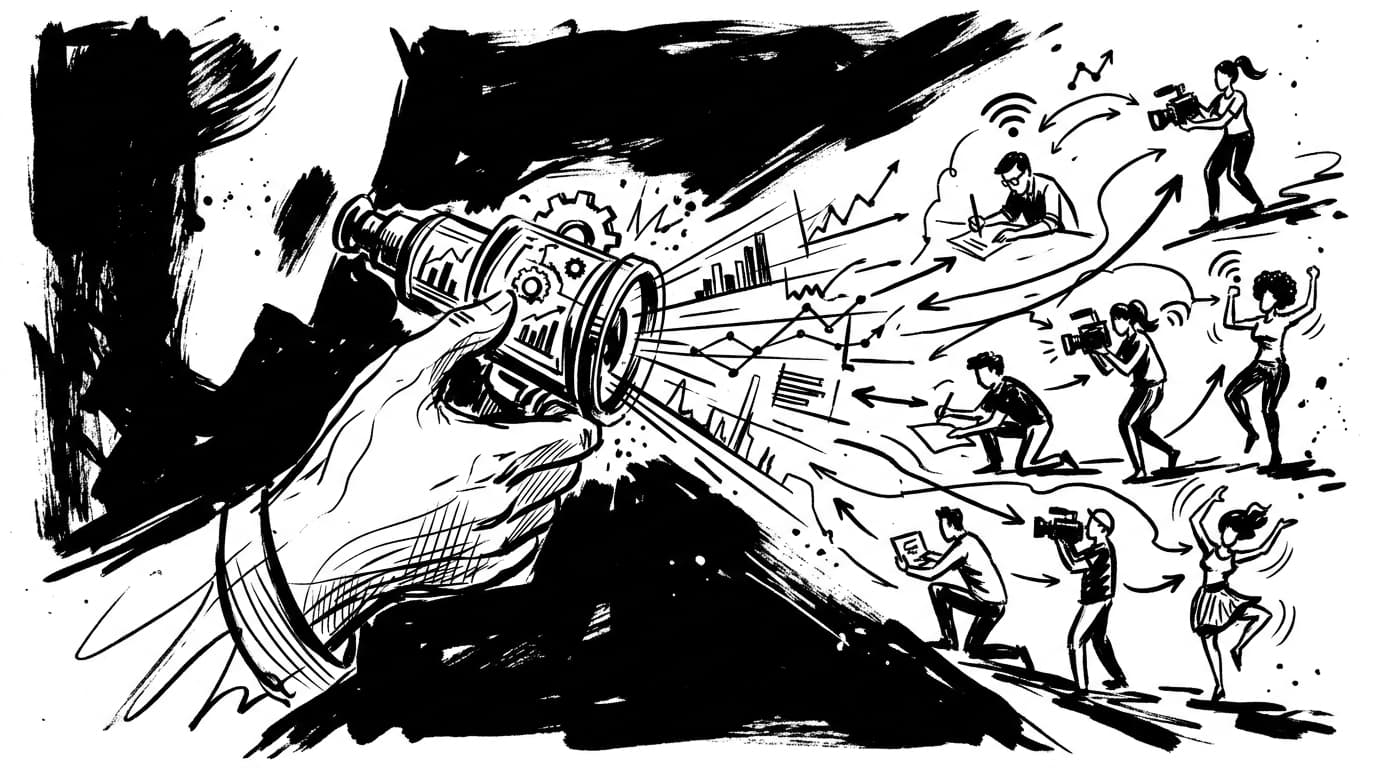

We built ViralDeck because we got tired of the same conversation.
A brand runs a UGC campaign with 20 creators. The content goes live on TikTok, Instagram Reels, and YouTube Shorts. Two weeks later, someone asks: "Which creators actually drove results?"
And then everyone scrambles. Someone opens a Google Sheet. Someone else screenshots TikTok analytics. A third person is scrolling through Instagram profiles, manually writing down view counts. By the time the data is collected, it's already outdated.
This is the reality for most teams running creator campaigns right now. And it's costing them real money.
The Spreadsheet Problem
Here's what a typical UGC tracking workflow looks like in 2026:
- A marketing manager creates a Google Sheet with columns for creator name, platform, video URL, views, likes, and posting date
- Someone (often a VA or intern) manually checks each creator's profile every few days
- The numbers get copy-pasted into the sheet
- By Friday, the sheet has 15 tabs, three conflicting formulas, and nobody trusts the data
I've talked to agency owners managing 50+ creators who spend 10-15 hours per week just on tracking. That's not strategy. That's data entry.
The worst part? When those numbers finally land in a report, they're 3-5 days old. You can't optimize a campaign with week-old data. You can't catch a viral spike after it's already faded. You can't identify your top performer when the spreadsheet says "need to update."
Why Tracking Matters More Than You Think
Let's look at some numbers. UGC content generates 6.9x more engagement than brand-created content. Product pages with UGC convert 74% higher. And UGC campaigns produce 4x more clicks than traditional ads while cutting cost-per-click by 50%.
But here's the thing most people miss: those numbers only work if you know which content is performing. Running a UGC campaign without proper tracking is like running paid ads without looking at your analytics dashboard. You're spending money, but you have no idea where the returns are coming from.
When brands like Timberland and KraftHeinz run creator campaigns with agencies like brkfst.io, they're not guessing which content works. They're measuring everything. The brands winning at UGC in 2026 treat creator content with the same rigor as their paid media.
What Actually Breaks When You Scale
Tracking three creators on a spreadsheet? Totally fine. Tracking 30 across three platforms? That's where things fall apart.
The problems compound fast.
Posting compliance
Creators post at different times, sometimes late, sometimes on the wrong platform. Without a system, you don't notice until someone manually checks. That could be days.
View data decays instantly
Views change hourly. A video might get 500 views on day one and 50,000 by day three. If you're checking weekly, you'll miss the pattern entirely. You won't know that Creator A's content consistently spikes on day two, which means you should be boosting it on day two.
Cross-platform comparison is a nightmare
A creator's TikTok might get 100K views while their Reel of the same content gets 8K. That insight matters for budget allocation, but good luck tracking it across three browser tabs and a spreadsheet.
Payout calculations become error-prone
And the real killer: when it's time to calculate payouts, you're back to manual math. How many videos did each creator post? What were the total views? Did they hit the CPM threshold for a bonus? Every one of those calculations is a potential error, and every error is either money lost or a creator relationship damaged.
What a Real Tracking System Looks Like
We built ViralDeck to solve exactly this. Not as another influencer marketing platform (there are plenty of those), but as a focused tracking and analytics tool for teams running UGC campaigns.
Here's what changes when you stop using spreadsheets:
Automatic video tracking. You add a creator's TikTok, Instagram, or YouTube handle once. The system pulls their videos automatically. No more manual checking, no more screenshots, no more "can someone update the sheet?"
One dashboard for everything. You see all your creators across all platforms in one view. Daily view counts. Engagement metrics. Viral spikes flagged automatically. You know who's performing before your morning coffee.
Real-time data. When a creator posts a video that starts gaining traction, you see it happening. Not three days later when the intern updates the spreadsheet. Real-time means you can amplify what's working while it's still working.
Automated payout math. You set your CPM rate, your base pay per video, your bonus thresholds. The system calculates everything based on actual view data. No manual math. No disputes. No awkward conversations with creators about miscounted views.
The Numbers That Changed Our Minds
When we were validating the idea for ViralDeck, we kept hearing the same thing from agencies and brand teams.
One agency told us they were spending $2,400/month on a virtual assistant whose primary job was updating tracking spreadsheets. That's $28,800 a year, just to have semi-accurate data that was still 2-3 days behind.
Another brand manager said they'd lost a top-performing creator because a payout dispute over view counts (tracked manually) soured the relationship. The creator's content had generated over 2M views for the brand. That's not a spreadsheet error. That's a business loss.
The UGC platform market is projected to hit $43.9 billion by 2031, growing at 28% per year. The industry is exploding, but the tools most teams use to manage it haven't caught up.
Who This Is Actually For
ViralDeck isn't for everyone, and we're fine with that.
If you're a solo creator posting your own content, you probably don't need this. Your platform analytics are enough.
But if you're a brand running campaigns with multiple creators, if you're an agency managing UGC for clients, if you're the person who gets asked "so how did the campaign do?" and your answer involves opening a spreadsheet, this is built for you.
We track TikTok, Instagram Reels, and YouTube Shorts in one place. We refresh data every 12-24 hours depending on your plan. We handle payout calculations, creator management, and campaign organization.
The Pro plan starts at $79.99/month for unlimited creator accounts and up to 1,000 videos. For context, that's less than what most teams spend on a single day of manual tracking.
What's Coming Next
This is our first blog post. Consider it a statement of what we believe: UGC campaigns are too valuable to manage with guesswork.
We're going to be writing about creator campaign strategy, platform-specific tracking tips, payout models that keep creators happy, and the operational side of scaling UGC that nobody talks about.
If you're running UGC campaigns and you're tired of the spreadsheet chaos, give ViralDeck a try. There's a 7-day money-back guarantee, so the worst case scenario is you go back to your Google Sheet.
But I don't think you will.
Related articles


Ready to track your UGC campaigns?
Stop using spreadsheets. Start seeing what's actually working.